
The professional working environment is constantly changing, where some of the most valued skills in every industry include adaptability, digital know-how and a strong willingness to learn.
Many employers search for people who can develop the necessary professional skills to navigate new challenges. As a professional, you might find the need to invest in your own growth where you can open doors to career advancement, find better job security and develop a sense of personal achievement.
This guide is your step-by-step roadmap to help you build up your professional expertise and gain the skills to develop as a professional in the most efficient way. You will learn how to identify vital skills, draw up a personal development plan, seize every learning opportunity, connect and build a supportive network, and track your progress every step of the way.
Navigating the Changing Landscape of Professional Skills
The workplace is transitioning rapidly, and to develop professional skills that matter, it is vital to understand what is driving these shifts. From digital transformation to creating new ways of working to improve efficiency, the landscape for professionals is evolving at an unprecedented pace.
How the Demands of The Workplace Has Evolved
Over the past decade, digital transformation and globalisation have been the most influential factors that have shaped the way we develop professional skills. Today, employees are expected to independently manage their professional development rather than rely solely on employers and mentors. This shift means that it is vital to be adaptable, up-to-date on your digital literacy and learn how to adopt cross-functional roles.
The rise of AI and automation is also redefining roles. As the simple routine tasks become automated, the need to develop professional expertise in both technical and soft skills keeps increasing. An example of this is data analytics, which now has to be accompanied by must-have skills that include effective communication and creative thinking.
Industry experts and professional development organisations such as InPD have highlighted the value of lifelong and continuous learning and this aligns with the surge in online and in-person training programmes that emphasises the importance of further training. Professionals who continuously upskill can navigate shifting job roles and requirements with greater confidence.
Remote and hybrid work arrangements are also reshaping the key skills needed to succeed. Digital collaboration, time management and self-motivation are now essential competencies needed to develop professional resilience in a workforce that is distributed between in-person and remote engagements.
The Workplace Trends Driving Skill Development
There is a clear trend that indicates that workplaces value strategic thinking and problem-solving over purely task-based roles. Organisations search for individuals who are driven to developing their professional leadership abilities, are emotionally intelligent and can communicate effectively across diverse teams.
Professional accreditation and recognised qualifications are becoming more important, as they indicate that candidates have the ability to commit to ongoing learning. Many professional development courses now focus on leadership, coaching and strategic planning, supporting the need for professionals who are versatile.
Agility and adaptability in candidates have become increasingly valuable in today's workplace. Professionals who can respond effectively to changing business needs and embrace new challenges are better positioned for long-term success. At the same time, organisations are fostering more collaborative, feedback-driven cultures, where regular feedback and peer learning help employees keep their skills relevant and continue growing throughout their careers.
According to the Future of Jobs Report 2025, the demand for hybrid skill sets that blend technical knowledge with interpersonal and problem-solving abilities will continue to rise. Professionals who embrace lifelong learning and adapt to change will be well positioned to thrive.
How to Identify Essential Professional Skills
In today's rapidly evolving professional environments, the skills that drive success are constantly changing and acquiring these skills will play a key role in identifying worthy candidates. Understanding which competencies employers value most can help you stay competitive, advance your career and adapt to new opportunities. By identifying and focusing on both technical expertise and interpersonal abilities, you can build a well-rounded skill set that supports long-term professional growth. Let’s explore the essential skills you’ll need to succeed and how to identify and nurture them.
Core Skills in Demand
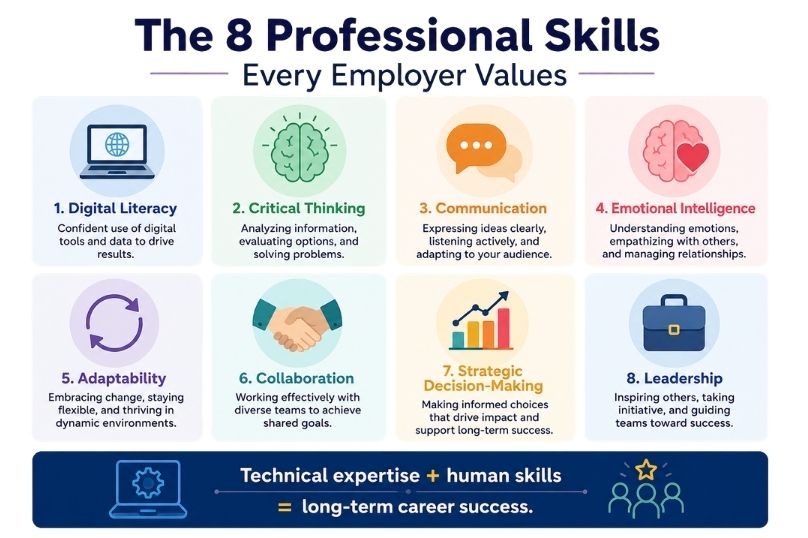
While specific job requirements vary between industries, certain core skills remain highly valued across almost every sector. Digital literacy has become a fundamental requirement, with employers expecting professionals to be comfortable using digital tools, online platforms and data-driven technologies.
Strong critical thinking and decision-making abilities are equally important. Organisations increasingly seek individuals who can analyse information, solve complex problems and make informed decisions. Emotional intelligence also plays a key role, helping professionals navigate workplace relationships, communicate effectively and manage challenges with confidence.
Communication skills are at the heart of professional success. The ability to express ideas clearly, listen actively and collaborate with others is essential in both traditional and remote work environments. Alongside this, adaptability and resilience enable professionals to respond positively to change, embrace new opportunities and remain effective in dynamic workplaces.
If you’re looking for practical resources to develop professional skills in these areas, the Professional Skills Hub offers a comprehensive starting point.
Developing Specialised knowledge and Transferable Skills
In addition to the foundational and core abilities, developing specialised expertise can help you to stand out in your field. Whether it involves mastering a particular technology, gaining industry-specific knowledge or earning professional qualifications, specialised skills can strengthen your credibility and career prospects.
At the same time, transferable skills are just as valuable. Abilities such as critical thinking, problem-solving, creativity, leadership and project management allow you to fit into different roles and industries. As careers become more flexible, these skills allow professionals to adapt more easily to new opportunities and changing workplace demands. For example, professionals in STEM are now expected to blend technical knowledge with soft skills like communication and teamwork.
Professional Certifications and accreditations can further enhance your expertise while demonstrating a commitment to continuous learning. Equally important are personal development skills such as setting healthy boundaries, managing workloads effectively and responding constructively to feedback. Together, these capabilities contribute to long-term professional resilience and career sustainability.
Using Feedback and Self-Assessment to foster professional growth
Professional development begins with identifying and understanding your strengths and areas for improvement. Regular self-reflection, combined with feedback from colleagues, managers and mentors, can provide valuable insights into your performance and development needs.
Many organisations now encourage regular feedback sessions as a part of their workplace culture, to support ongoing growth. These insights help you set realistic, measurable and relevant goals. Tools like the SMART framework (make your goals Specific, Measurable, Achievable, Relevant, and Time-bound) can be particularly useful when setting objectives. For example, you might set a target to improve your communication skills within six months, while tracking your progress with feedback from colleagues.
Maintaining your growth mindset ensures you remain on track. By remaining open to constructive feedback and regularly reviewing your progress, you can ensure that your skills continue to align with both industry developments and your personal career aspirations. This ongoing commitment to learning and improvement helps build professional capabilities that remain relevant throughout your career. Regularly reviewing your development keeps your skills aligned with both industry trends and personal ambitions, making it easier to develop professional abilities that last.
Creating Your Professional Skills Development Plan
Having a clear plan is essential if you want to develop skills that make you stand out as a professional. With the workplace dynamics evolving, structuring your approach will help you stay focused and motivated. This section will walk you through each step, from setting strategic goals to overcoming common barriers.

Setting Clear and Meaningful Goals
The best way to begin your professional development journey is by setting clear and realistic goals and using those to develop strategic objectives. Having a strong sense of direction will help you to pinpoint where you want your career to go and understand how you need to focus your efforts on the skills and experiences that will have the highest impact. Goal-setting tools such as the SMART framework can help transform broad ambitions into practical action plans. Creating a structure and plan for your objectives can be done using the SMART Goals Template to ensure your plan is actionable.
For example, you might set a goal to improve your leadership abilities within six months. Breaking this down makes it easier to track your progress and make your goals manageable. Well-defined and planned-out goals give you a sense of direction and help you to make sure your learning efforts will efficiently contribute to your long-term professional goals.
Creating a Personalised Learning Plan
Once your goals have been established, the next step is to evaluate your current strengths and areas for improvement. Prioritise the competencies and skills that are most relevant for your industry, role and future career aspirations. Keeping yourself up-to-date with current trends can help you to prioritise the skills that will most likely be relevant in the years ahead.
Creating a plan and a timeline to develop professional skills is essential for balancing different learning methods. Your plan might include a combination of different development approaches, including online courses, workshops, mentoring opportunities and practical workplace experience. A balanced learning plan often incorporates gaining hands-on experience while learning new concepts that can help reinforce knowledge and accelerate skill development. For example, you might take on new responsibilities at work, while enroling yourself in a digital literacy course on the side.
Creating a personalised pathway keeps you focused. It also ensures that you can make the biggest impact by targeting the right skills and makes your journey to develop professional abilities purposeful and relevant.
Overcoming Challenges and staying motivated
Professional development is not a straightforward process and even the best planned journeys will face obstacles. Limited time, busy schedules and competing priorities often affect your progress. Creating a plan that is broken up into smaller steps can help you account for these challenges and make the process more manageable.
Breaking larger objectives into smaller, manageable milestones can make progress feel more achievable. Celebrating the small wins can help you to build your confidence and drive your motivation. If you encounter a setback, adjust your timeline or approach, rather than abandon your plan. As industries evolve and new opportunities emerge, you may need to reevaluate your goals or learning strategies. Viewing professional development as an ongoing process rather than a fixed destination allows you to adapt to change and continue growing throughout your career.
Making the most of Learning and Development Opportunities
In today's rapidly shifting job market, continuous learning is essential for long-term success. Acquiring new knowledge, tools and technologies opens the doors for many opportunities for growth. By understanding how to incorporate opportunities for both formal and informal learning channels, you can commit to learning new things efficiently and stay ahead of industry trends.
Formal and Informal Learning Pathways
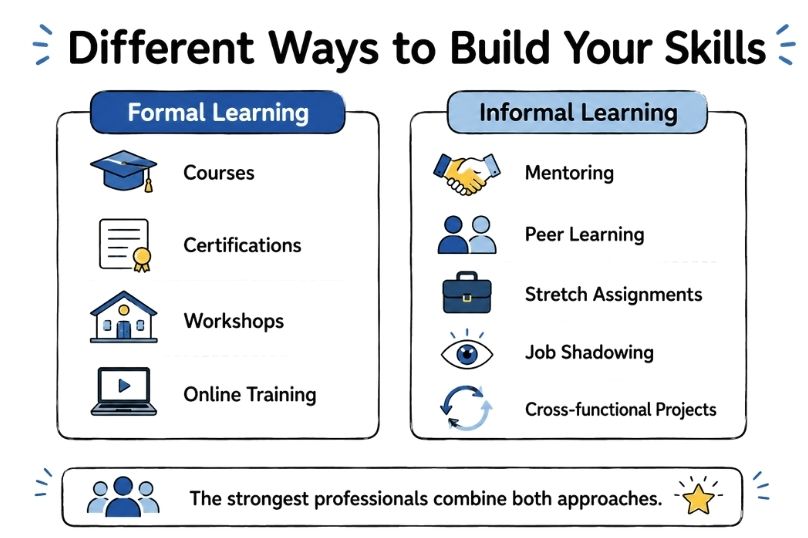
With the numerous commitments that come with different jobs, it is important to explore a mix of structured and flexible learning options that won't become difficult to incorporate with your current workload. Formal channels include online courses, virtual classrooms, and in-person training, all designed to deliver up-to-date content and recognised qualifications.
Informal learning is equally valuable. Mentorship programmes, peer learning, and on-the-job experiences offer practical, real-world development. For instance, taking on stretch assignments or shadowing colleagues helps you apply new skills in a supportive environment.
Here's a quick comparison of learning channels:
| Channel | Format | Benefit |
|---|---|---|
| Online Courses | Digital | Self-paced, flexible |
| In-person Training | Classroom | Networking, hands-on practice |
| Mentorship | One-to-one/group | Personalised guidance |
| Peer Learning | Collaborative | Shared experiences |
| On-the-job Learning | Practical | Immediate application |
Combining different learning approaches allows you to gain both theoretical knowledge and practical experience, creating a more well-rounded foundation for professional growth.
The value behind Networking and professional Communities
Building strong professional relationships play a significant role in your career development journey. Engaging with colleagues, industry experts, mentors, and leaders exposes you to new ideas, diverse perspectives and valuable learning opportunities.
You can join professional networks that often provide access to resources, events, and discussions that can broaden your understanding of industry trends and best practices. Attending conferences, workshops, webinars, and networking events can help you expand your connections while increasing your visibility within your field..
Taking on a mentor, can be particularly beneficial. Learning from experienced professionals can provide guidance, encouragement, and practical advice that supports both personal and professional growth. Strong professional relationships not only enhance learning but can also open doors to future career opportunities. Platforms like the Mentorship Directory can connect you with experienced professionals for guidance and support. Leveraging these connections not only helps you learn but also boosts confidence and visibility.
Using Feedback as a tool for growth
Regular constructive feedback is the backbone of any plan to develop professional competence. Seeking valuable reviews from managers, colleagues and mentors can help you identify where you are excelling, discover areas for improvement and unlock new perspectives on your performance.
Constructive criticism should be welcomed as an opportunity to learn and grow. Regular feedback can help you to formulate actionable steps that move you closer to your goals, by monitoring your progress, refining your goals and making informed decisions about your priorities.
Feedback is not just about receiving advice and criticism. Most professionals use it as a catalyst for growth by combining external insights and self-reflection to develop professional skills over time.
staying flexible and Embracing change
Adaptability has become one of the most important qualities to have in the modern workplaces. As industries, technologies, and business needs continue to evolve, professionals who remain open to change are often better equipped to seize new opportunities and overcome challenges.
Curiosity, an openness to feedback and maintaining a willingness to learn can help you navigate uncertainty with confidence. Whether it involves adopting new technologies, learning new processes, or adjusting to changing workplace expectations, flexibility enables you to remain effective in a constantly evolving environment. For example, adopting new digital tools or learning from organisational changes keeps your skills relevant.
Agility means being proactive rather than reactive. By continually updating your learning plan, you ensure you are always prepared for the next challenge and ready to develop professional capabilities further.
Building a Supportive Professional Network
Professional growth needs to be accompanied by a supportive professional network to develop professional skills. Surrounding yourself with peers, mentors, and industry experts allows you to gain access to shared knowledge, fresh perspectives, and collaborative opportunities. These relationships are vital for professional development as it not only accelerates personal growth but also helps you overcome workplace challenges through collective problem-solving.
Why Community and Collaboration is important
Building a network is more than just making professional connections. It is about fostering genuine relationships based on trust, mutual support and shared goals that move towards developing professional skills. These relationships can be a good way to create a personal network that will allow you to share knowledge, get advice, and become proactively involved in different ways to seek practical knowledge.
A good example of collaborative relationships are peer support groups, which can help you navigate challenging workplace situations, by exchanging different ideas that will offer different viewpoints and practical solutions. Whether its through online forums, professional associations, industry events, or workplace networks, these communities also create a safe space to test new ideas, learn from others' experiences, and stay motivated through shared goals.
Collaboration in online forums, professional groups, or industry meetups can give you access to a wealth of resources. Working alongside other industry professional can increase your chances of developing your professional abilities by sharing expertise, gaining new skills, and insights that may not be available through individual learning alone.
Finding and Maximising Mentorship Opportunities
Mentorship is a powerful way to develop professional expertise and accelerate your career. Experienced mentors can provide you with guidance, hold you accountable, provide constructive feedback and give you valuable insights based on their own career journey and experiences. Whether you find a mentor within your workplace or through external networks, the key is to find someone who can support you through helping you navigate challenges, refining your goals, and making more informed decisions about your future.
Maximising your mentorship opportunities means being proactive. This would entail being prepared with questions, set clear objectives and expectations, and regularly reviewing your progress together. Regular conversations surrounding feedback create opportunities to track progress, discuss challenges, and identify areas for further growth. Successful mentoring relationships often lead to promotions, new opportunities, and broader networks. If you want to track your skill development journey, consider using a Progress Tracker for Professional Growth to visualise your achievements and set future goals.
Beyond career advice, mentorship often helps expand professional networks, opening doors to new opportunities, experiences, and connections that may otherwise be difficult to access.
increasing Your Influence and Professional Presence
Sometimes, developing you professional skills involves making sure that you stand out in your industry, which means that there needs to be some focus on expanding your influence and visibility. even if you are going through a learning, phase, you can still serve as a go-to authority by sharing your insights, leading or contributing to discussions, and participating in industry activities can help establish you as a trusted and engaged professional. This could mean attending conferences, publishing articles, or leading workshops.
Visibility is not only about being seen, but also about creating a reputation for your expertise and willingness to help others. The more you contribute, the more you learn and grow alongside your peers. Take every opportunity to present your ideas, participate in panels, or join industry committees.
By actively engaging and sharing your journey, you inspire others and continue to develop professional skills that set you apart in a competitive job market.
Measuring Progress and Sustaining Your Professional Growth
Your professional development is an ongoing journey which requires constant tracking and re-evaluating. Dedicate some time to reflecting on your achievements and finding where you need to adjust your approach. This can ensure your growth stays on course, even as the job market evolves.
Tracking Achievements and Milestones
Developing professional skills requires setting clear benchmarks and tracking your progress. A number of different tools can be used to keep track of your progress, such as a professional development journal or digital portfolio. You can keep track of the your progress by taking note of completed training or certifications, documented feedback from mentors, managers and peers and compiling points of self-reflection on new skills applied in real projects
Regular self-assessment strategies, like 360-degree feedback, help you to identify your strengths and areas to improve. This habit makes it easier to see how your efforts to develop professional abilities are paying off.
Reviewing and Adjusting Your Goals
The path to career development isn't always a linear process, which is why your goals constantly needs to be reviewed and adjusted. As industries evolve, technologies advance, and personal aspirations change, it is important to regularly revisit your goals and ensure they remain relevant. Use feedback from performance reviews and market research to update your goals.
SHRM 2025 Talent Trends, highlighted the idea of evolving skill requirements. This can can help you prioritise which skills to focus on next, together with feedback from performance reviews, identifying industry trends, and gaining professional experiences. Learning from setbacks, creating new goals and recalibrating your approach ensures your plan stays relevant and achievable, even when circumstances change.
Embracing Lifelong Learning
To truly develop professional expertise, you need to make continuous improvement a habit. Seek out new opportunities for learning and measuring your potential, even if it means venturing into new challenges through taking on tasks like stretch assignments or altering your work team dynamic to include more cross-functional team work.
Organisations like Walmart have invested in upskilling their workforce through targeted training, as seen in their AI Workforce Initiative. This commitment to lifelong learning not only boosts job security but also keeps their employees' skills fresh and in demand.

Celebrating Success and Recognising Your Growth
Recognising your achievements and tracking your progress is essential to develop professional motivation and maintain momentum. Celebrate every win, no matter how small, by sharing them with your network or documenting them in your portfolio. You can acknowledge growth by sharing success stories at team meetings, posting about new certifications on professional platforms such as LinkedIn and even journaling and documenting on challenges in order to reflect on them,
By taking time to celebrate, you inspire both yourself and others to continue striving for excellence in your professional journey.