
Effective mentoring is a game-changer, with 84% of professionals crediting it for career breakthroughs. As competition intensifies, mastering your mentoring approach is crucial for both personal and professional growth.
This guide delivers an expert-driven roadmap, exploring the latest trends, common challenges, and emerging opportunities in modern mentoring. Discover how your mentoring journey can evolve with new digital platforms, inclusive practices, and advanced strategies.
You will learn the fundamentals of successful mentoring, how to build strong mentor-mentee relationships, leverage technology, and measure results. Ready to unlock real-world impact? Dive in and apply these proven strategies to transform your mentoring experience.
Understanding the Foundations of Effective Mentoring
Effective mentoring has rapidly evolved to meet the complex demands of today's professional world. As we look at your mentoring journey, it is essential to understand what modern mentoring really means, what qualities drive its success, and how it can transform careers. By grasping the foundations, you can position your mentoring relationships for meaningful, measurable impact.
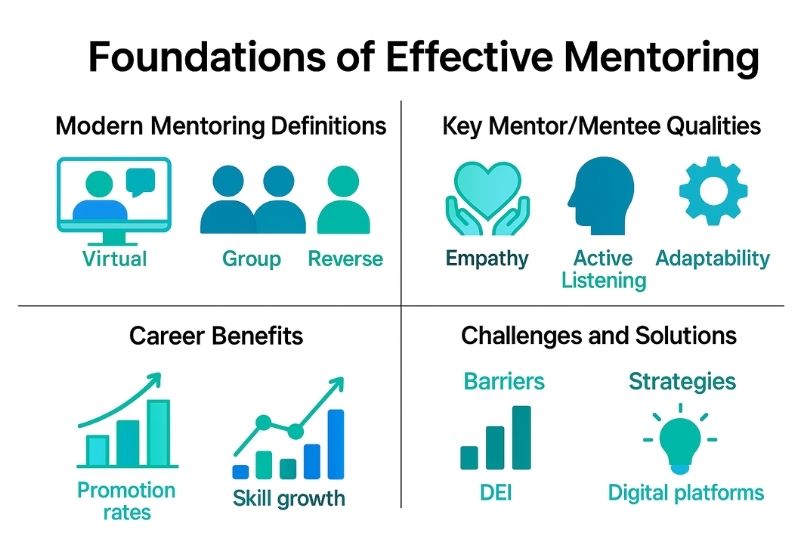
Defining Modern Mentoring
Your mentoring experience can take many forms. Traditional one-on-one mentoring remains vital, but virtual, group, and reverse mentoring are now mainstream. Virtual mentoring connects people across geographies, while group mentoring supports collaborative growth. Reverse mentoring flips the dynamic, letting junior staff share digital insights with senior leaders.
It is important to distinguish your mentoring from coaching and sponsorship. Mentoring focuses on holistic development and guidance, coaching targets specific skills, and sponsorship actively advocates for advancement. Aligning your mentoring approach with personal and organizational goals ensures that both mentor and mentee move forward together.
Key Qualities of Successful Mentors and Mentees
What makes your mentoring relationships thrive? Empathy, active listening, adaptability, and commitment are essential. Both mentors and mentees should foster emotional intelligence, which helps build trust and navigate challenges.
Consider this: 78% of professionals say emotional intelligence is crucial for successful mentoring. This trait allows mentors to understand mentees' perspectives and adapt their guidance. For your mentoring to flourish, prioritize open-mindedness and a willingness to learn from each interaction.
The Benefits of Mentoring for Career and Personal Growth
Your mentoring journey offers tangible rewards. Employees with mentors are five times more likely to earn promotions and build confidence. Skill acquisition accelerates as mentees receive tailored advice and hands-on opportunities.
These benefits are supported by recent Mentoring Statistics for 2025, which show that structured mentoring programs drive higher retention and advancement across industries. Real-world examples from healthcare, STEM, and business demonstrate that your mentoring can be the catalyst for lasting career success.
Common Challenges and How to Overcome Them
Every mentoring relationship faces hurdles. Mismatched expectations, communication gaps, and time constraints are common barriers. For your mentoring to succeed, address these challenges early.
Strategies include setting clear objectives, scheduling regular check-ins, and adapting communication styles for cross-generational or cross-cultural partnerships. In remote setups, initial resistance can be eased by using video calls and shared digital spaces, helping your mentoring relationship build momentum and trust.
The Evolving Landscape: Trends Shaping Mentoring
Your mentoring experience is influenced by several key trends. Diversity, equity, and inclusion (DEI) are now embedded in most programs, ensuring more equitable access and outcomes. Digital mentoring platforms enable global connections and real-time support.
A recent study found that 65% of organizations are investing in structured mentoring programs. As your mentoring journey continues, expect technology and DEI to create even more opportunities for personal and professional growth.
Building and Sustaining Powerful Mentor-Mentee Relationships
Unlocking the full potential of your mentoring experience requires more than just matching a mentor with a mentee. It involves intentional actions, clear communication, and a shared vision for growth. In this section, you will discover proven strategies and practical steps to cultivate mentor-mentee relationships that drive real progress.
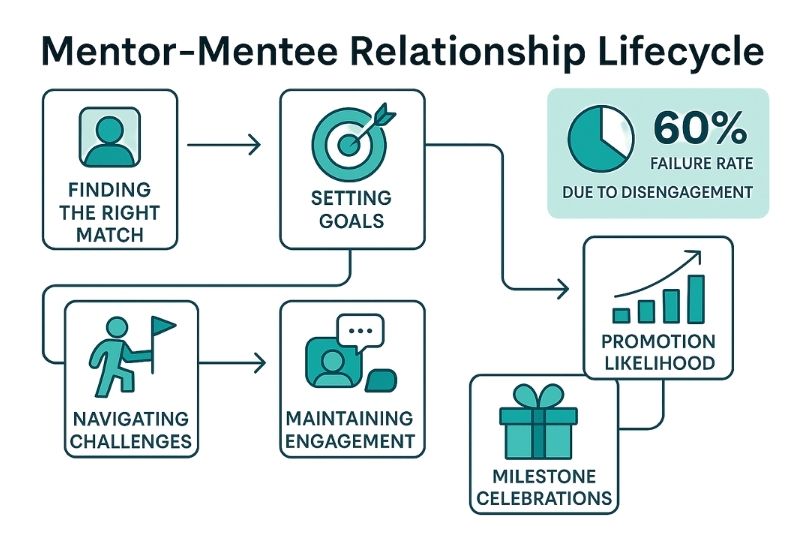
Finding the Right Mentor or Mentee
The first step to strengthening your mentoring relationship is finding the right match. Compatibility matters—shared values, aligned career goals, and complementary expertise set the stage for success. Start by outlining your mentoring objectives, then seek candidates through networking events, professional associations, or digital platforms.
Targeted outreach on LinkedIn is a powerful approach. By clearly stating your interests and aspirations, you increase the likelihood of building a high-impact connection. Remember, your mentoring journey benefits from intentional selection, not just convenience.
Consider these tips:
Define your core values and desired skills
Use advanced search filters on networking platforms
Reach out with personalized messages highlighting mutual interests
Prioritizing fit at the outset ensures your mentoring partnership starts strong and stays productive.
Setting Clear Expectations and Goals
Establishing clear expectations is fundamental to your mentoring success. Both mentor and mentee should articulate what they hope to achieve, setting the foundation for accountability and growth. Using SMART (Specific, Measurable, Achievable, Relevant, Time-bound) goals is highly effective.
A sample mentoring goal-setting table:
Goal Area | SMART Example |
|---|---|
Skill Growth | Learn data analysis in 3 months |
Career Path | Prepare for a promotion by Q4 |
Networking | Attend 2 industry events this year |
Start each relationship with a written agreement or template. This clarifies roles, timelines, and preferred communication styles. With structured goals, your mentoring relationship becomes a catalyst for measurable progress.
Establishing Trust and Open Communication
Trust is the backbone of your mentoring relationship. It enables honest feedback, vulnerability, and true growth. Begin by establishing psychological safety, both parties should feel comfortable sharing challenges and aspirations.
Regular check-ins foster transparency. Schedule biweekly or monthly meetings, using video or chat tools for consistency. Implement feedback loops to address issues early and refine your mentoring approach.
For example, in a tech mentorship, transparent communication prevented misunderstandings about project deadlines and learning objectives. Encourage open dialogue, and remember that your mentoring journey thrives when trust is prioritized.
Navigating Difficult Conversations and Conflict Resolution
Even in the strongest relationships, disagreements can arise. The key to your mentoring resilience is addressing conflict constructively. Practice active listening, focus on understanding the other person’s perspective before responding.
Role-playing challenging scenarios can help both mentors and mentees build confidence in managing conflict. Consider these steps:
Identify the root cause of disagreement
Discuss issues calmly and respectfully
Agree on actionable solutions
Expert mentors recommend maintaining a solution-oriented mindset. By embracing these techniques, your mentoring partnership can weather challenges and emerge stronger.
Maintaining Engagement and Motivation Over Time
Sustaining momentum is vital for your mentoring relationship’s long-term success. Engagement often wanes due to competing priorities or unclear progress. Celebrate milestones, track achievements, and revisit goals regularly to keep both parties invested.
Did you know that 60% of mentoring relationships fail due to lack of engagement? Addressing challenges like the confidence gap, especially in fields such as STEM, is crucial, effective mentoring can help close this gap, as explored in Confidence gap in women STEM.
Strategies to maintain motivation:
Set recurring progress reviews
Acknowledge accomplishments, big or small
Adjust strategies as goals evolve
By applying these techniques, your mentoring connection remains dynamic, rewarding, and impactful.
Advanced Strategies for Maximizing Mentoring Impact
To unlock the full benefits of your mentoring program, it is essential to go beyond the basics and embrace advanced strategies. These approaches ensure your mentoring delivers measurable impact, adapts to diverse needs, and remains relevant in an ever-evolving professional landscape.
Customizing Mentoring Approaches for Diverse Needs
Every organization and individual brings unique backgrounds, goals, and learning preferences to the table. To maximize your mentoring effectiveness, tailor your mentoring style to suit the career stage, industry, and cultural context of participants.
For example, early-career professionals may benefit from structured guidance and skill-building, while executives often seek peer-level discussions and strategic advice. Emphasizing cultural competence is especially crucial in global settings, where understanding different perspectives can make or break your mentoring outcomes.
By customizing your mentoring approach, you ensure each relationship is relevant and impactful, driving both organizational and personal growth.
Leveraging Group, Peer, and Reverse Mentoring
Expanding your mentoring format beyond the traditional one-on-one model can significantly enhance learning and engagement. Group mentoring fosters collaboration and knowledge sharing among multiple participants, while peer mentoring allows colleagues at similar career stages to support one another.
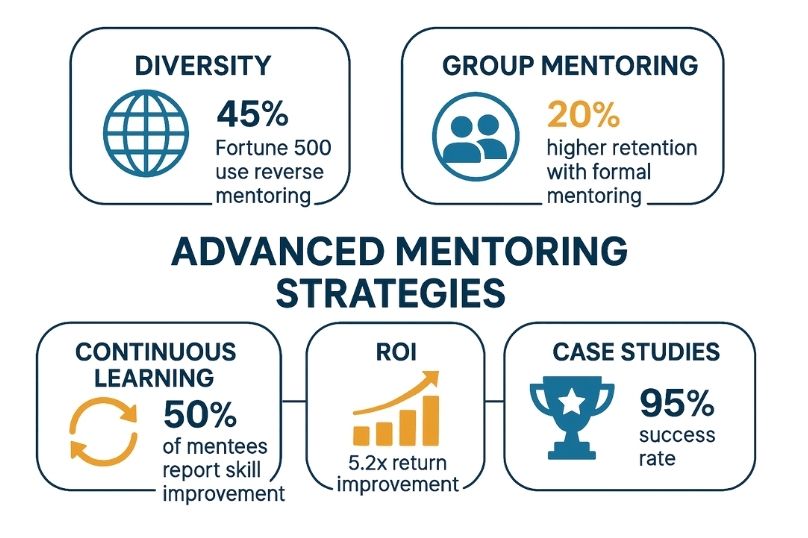
Reverse mentoring, where junior employees mentor senior leaders, bridges generational skill gaps and promotes digital fluency. In fact, 45% of Fortune 500 companies now utilize reverse mentoring programs to drive innovation and inclusivity.
Adopting these alternative formats within your mentoring initiatives diversifies perspectives and accelerates growth for all involved.
Integrating Feedback and Continuous Learning
Sustained progress in your mentoring relationships depends on transparent feedback and ongoing learning. Establishing regular feedback loops, reflection exercises, and journaling sessions allows mentors and mentees to track development and identify areas for improvement.
In STEM fields, for example, structured feedback has been linked to higher retention and advancement for women. According to Women in STEM statistics 2025, mentoring initiatives that prioritize continuous learning see significant increases in participant satisfaction and outcomes.
Embedding these practices into your mentoring program ensures it remains dynamic and responsive to changing needs.
Measuring and Demonstrating Mentoring ROI
To secure ongoing support for your mentoring efforts, it is essential to demonstrate their tangible value. Key performance indicators such as retention rates, promotion frequency, and skill development provide concrete evidence of success.
Utilize digital tools and frameworks to track these metrics over time. For instance, organizations with formal mentoring structures experience 20 percent higher retention compared to those without, highlighting the direct impact on organizational stability.
Regular measurement keeps your mentoring program aligned with strategic objectives and justifies continued investment.
Case Studies: Successful Mentoring Programs in Action
Leading companies and educational institutions offer valuable lessons on scaling your mentoring initiatives. For example, a global tech firm implemented a hybrid mentoring model combining group sessions with peer mentoring, resulting in a 30 percent boost in leadership pipeline diversity.
Similarly, universities adopting reverse mentoring have seen improved cross-generational understanding and collaboration. Participant testimonials consistently point to increased confidence, skill acquisition, and career advancement as the top benefits of your mentoring engagement.
By learning from these real-world examples, you can refine and elevate your mentoring strategy for maximum impact.
Harnessing Technology to Enhance Mentoring
Technology is fundamentally reshaping your mentoring experience, making connections more accessible, scalable, and impactful than ever. The digital shift allows mentors and mentees to collaborate across continents, customize learning, and measure growth with unprecedented precision.
Digital Platforms and Tools for Remote Mentoring
Digital platforms are now the backbone of your mentoring initiatives. Modern solutions offer seamless matching, scheduling, and communication, enabling relationships to thrive regardless of location.
Platform Feature | Description | Benefit |
|---|---|---|
AI Matching | Smart pairing based on profile | Higher compatibility |
Integrated Scheduling | Built-in calendar tool | Simplified coordination |
Resource Libraries | Centralized learning materials | Easy access to knowledge |
Analytics Dashboard | Track progress and outcomes | Data-driven decisions |
According to recent Mentoring Software Market Analysis, investment in these platforms is expected to surge through 2030. In 2025, 70 percent of mentoring relationships are facilitated virtually, making digital proficiency essential to your mentoring success.
Utilizing Data Analytics for Personalized Mentoring
Data analytics is transforming your mentoring strategies by enabling more informed decisions. Platforms now use sophisticated algorithms to match mentors and mentees based on skills, interests, and career aspirations.
Analytics also help track progress, highlight skill gaps, and suggest targeted learning paths. For example, a STEM mentoring program may use analytics to identify participants needing additional project management skills, tailoring sessions accordingly.
Ethical data use is crucial. Always prioritize privacy and transparency when handling participant information within your mentoring program. A data-driven approach ensures that every mentoring relationship is both effective and personalized.
Virtual Collaboration and Communication Best Practices
Effective communication is the heart of your mentoring, especially in remote settings. Top tools include video conferencing, instant messaging, and project management platforms, all of which create a collaborative digital environment.
Best practices for virtual mentoring:
Schedule regular video check-ins to maintain engagement
Use shared documents for real-time collaboration
Leverage virtual whiteboarding for brainstorming sessions
You can also supplement your mentoring with on-demand workshops for women, providing flexible, skill-building opportunities that enhance remote learning.
Addressing Accessibility and Inclusion in Digital Mentoring
Ensuring accessibility and inclusion is vital to your mentoring program’s reach and impact. Digital platforms must support participants with diverse backgrounds and abilities, offering features like screen readers, captioning, and language options.
Technology can bridge geographic divides, allowing organizations to build truly global mentoring networks. Inclusive mentoring programs have been shown to increase participation by 30 percent, reflecting the value of accessible design in your mentoring initiatives.
Prioritizing accessibility ensures that everyone, regardless of ability or location, can benefit equally from your mentoring opportunities.
The Future of Mentoring Technology: Trends to Watch
Looking ahead, your mentoring journey will be shaped by emerging technologies. AI-powered coaches are providing real-time feedback, while virtual reality simulations offer immersive role-play and scenario training.
Gamified learning elements are increasing motivation and engagement. Experts predict that by 2030, mentoring will blend advanced technology with authentic human connection, ensuring your mentoring remains both innovative and personal.
Staying ahead of these trends will help you maximize your mentoring impact and adapt to the evolving digital landscape.
Step-by-Step Guide: Implementing a Successful Mentoring Program
Implementing your mentoring program requires a structured, strategic approach. Following these six steps ensures your mentoring initiative delivers measurable value and drives long-term success. Whether you are building a program for a large organization or your own professional growth, this guide will help you navigate each phase with confidence.
Step 1: Assess Organizational or Personal Mentoring Needs
Start your mentoring journey by identifying specific needs within your organization or personal development plan. Conduct a thorough needs assessment using surveys, interviews, or focus groups. Gather input from stakeholders, future mentors, and mentees to pinpoint gaps and opportunities.
Use survey templates to collect data on goals, existing skills, and areas for growth.
Analyze feedback to understand expectations and barriers.
Prioritize needs aligned with strategic objectives.
By taking time to assess needs, your mentoring program is built on a strong foundation, increasing the likelihood of meaningful outcomes.
Step 2: Design the Structure and Framework
Once your mentoring needs are clear, design a structure that fits your unique context. Choose the right model: one-on-one, group, or hybrid. Develop guidelines, policies, and clear criteria for matching mentors and mentees.
Define roles, responsibilities, and communication protocols.
Create a framework that fosters accountability and engagement.
Reference sample structures from leading organizations for inspiration.
A well-structured framework ensures your mentoring program runs smoothly and adapts to evolving needs, supporting long-term success.
Step 3: Recruit, Match, and Onboard Participants
Recruitment is vital for your mentoring initiative’s momentum. Attract mentors and mentees who are committed and align with your mentoring goals. Use digital tools to streamline the matching process based on skills, interests, and objectives.
Promote the program through internal communications and professional networks.
Leverage technology to facilitate accurate, data-driven matching.
Provide an onboarding checklist to set clear expectations and offer essential resources.
Effective onboarding lays the groundwork for trust and collaboration, setting the tone for productive mentoring relationships.
Step 4: Facilitate Training and Ongoing Support
Sustaining your mentoring program requires continuous training and support. Offer workshops on mentoring skills, diversity and inclusion, and effective communication. Establish mechanisms such as regular check-ins, resource libraries, and troubleshooting sessions.
Organize monthly mentor roundtables for peer learning and support.
Provide access to best practices and real-life scenarios.
Encourage mentors to share experiences from fields like Mentoring in Open Source Software to broaden perspectives.
Ongoing support keeps mentors and mentees engaged, helping your mentoring program adapt to new challenges and opportunities.
Step 5: Monitor Progress and Evaluate Outcomes
Track your mentoring program’s progress with regular reviews and feedback sessions. Use surveys and analytics to measure outcomes such as skill development, promotions, and retention rates.
Set clear KPIs to evaluate program impact.
Collect feedback from all participants to identify strengths and areas for improvement.
Highlight success stories, especially those demonstrating career advancement for women in STEM, to showcase tangible results.
Data-driven evaluation ensures your mentoring efforts remain effective, justifying ongoing investment and refinement.
Step 6: Scale and Sustain Mentoring Initiatives
After establishing a successful program, focus on scaling your mentoring initiative organization-wide. Develop strategies to reach new departments, teams, or geographic regions. Foster a culture of mentorship for lasting impact.
Share best practices and lessons learned from your mentoring pilot.
Use case studies to demonstrate scalability and adaptability.
Reference successful examples, such as those from open source communities, to inspire innovation.
With a commitment to continuous improvement, your mentoring program can thrive and evolve, empowering more individuals to achieve their full potential.
As you’ve seen throughout this guide, effective mentoring isn’t just a trend, it’s a vital catalyst for personal and career growth, especially in the dynamic world of STEM. If you’re ready to put these expert strategies into action and connect with like-minded professionals who support your goals, now is the perfect time to take the next step. You don’t have to navigate this journey alone, find the guidance and community you deserve. Navigating the mentoring challenges in STEM fields can be daunting, but with the right resources and connections, you can overcome these obstacles. Embrace opportunities to learn from experienced mentors who can provide invaluable insights and support tailored to your unique journey. Remember, the path to success is often built on collaboration and shared experiences, so actively seek out those who inspire and uplift you.
Find a Mentor and start building meaningful relationships that will help you thrive in your STEM career.