
Mid-career women in STEM fields face a critical juncture when evaluating new opportunities. Research indicates that 42% of women leave STEM careers mid-level due to workplace factors that could have been identified during the interview process. The questions candidates ask during interviews serve as powerful tools for assessment, yet studies show that 67% of mid-career professionals fail to ask strategic questions that reveal crucial information about organizational culture and advancement opportunities.
The interview process represents a two-way evaluation, particularly for experienced STEM professionals who possess specialized skills and knowledge. Women with 5-15 years of experience in science, technology, engineering, and mathematics fields must assess whether potential employers align with their career trajectories, values, and long-term professional goals.
Evaluating Career Advancement Opportunities
Mid-career STEM professionals should prioritize questions that reveal clear pathways for professional growth. Research demonstrates that companies with transparent advancement structures retain 34% more women in senior technical roles compared to organizations with ambiguous promotion processes.
Essential questions in this category include inquiring about the typical career progression timeline for technical professionals, the criteria used for promotion decisions, and the percentage of women currently in senior technical and leadership positions. Candidates should ask specific questions about mentorship programs, professional development budgets, and opportunities for cross-functional collaboration.
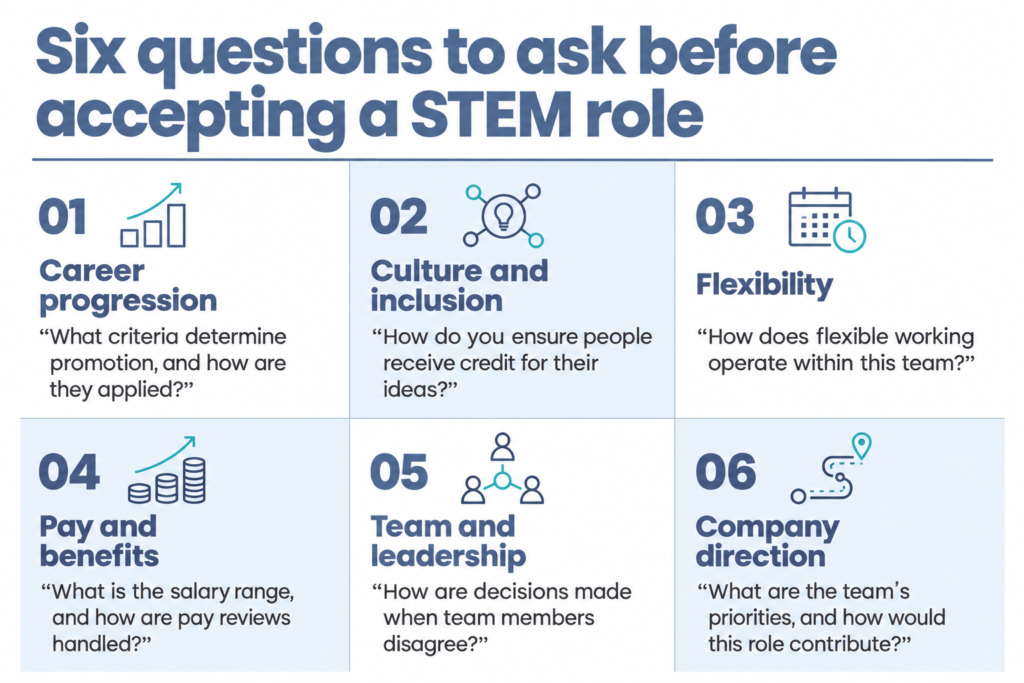
Data from the National Science Foundation indicates that women in STEM fields experience slower promotion rates, with the gap widening significantly at mid-career levels. Therefore, questions about performance evaluation processes, goal-setting frameworks, and success metrics become particularly important for women seeking to advance beyond individual contributor roles.
Candidates should also explore opportunities for technical leadership, project ownership, and visibility within the organization. Studies show that women often receive fewer high-visibility assignments, making it crucial to understand how challenging projects are distributed and how individual contributions are recognized and rewarded.
Assessing Organizational Culture and Inclusion
Workplace culture significantly impacts career satisfaction and advancement potential for women in STEM. Research reveals that 56% of women in technical fields cite cultural factors as primary reasons for considering career changes. Strategic questions about organizational culture provide insights into daily work experiences and long-term career prospects.
Effective inquiries include asking about diversity and inclusion initiatives, employee resource groups, and the company's approach to addressing unconscious bias in hiring and promotion processes. Candidates should explore how the organization measures and tracks diversity metrics, particularly in technical teams and leadership positions.
Questions about communication styles, meeting dynamics, and decision-making processes reveal important cultural indicators. Research shows that women in STEM environments often experience interruption patterns and idea attribution challenges, making it valuable to understand team collaboration norms and conflict resolution approaches.
Mid-career professionals should investigate how the organization supports different working styles and communication preferences. Studies indicate that inclusive cultures demonstrate measurable improvements in innovation metrics and employee retention rates, particularly among underrepresented groups in STEM fields.
Understanding Work-Life Integration
Work-life balance considerations become increasingly important for mid-career professionals, with 73% of women in STEM citing flexibility as a key factor in job satisfaction. Questions about work arrangements, schedule flexibility, and time management expectations provide crucial insights into organizational priorities and employee support systems.
Candidates should inquire about remote work policies, flexible scheduling options, and the company's approach to meeting scheduling across different time zones. Research demonstrates that organizations with robust flexibility policies experience 25% higher retention rates among women in technical roles.
Questions about vacation policies, sabbatical opportunities, and continuing education support reveal organizational investment in employee well-being and professional development. Studies show that companies prioritizing work-life integration report higher levels of innovation and employee engagement across all demographics.
Compensation and Benefits Evaluation
Compensation discussions require strategic questioning to ensure fair and competitive packages. Research indicates that women in STEM fields earn approximately 84 cents for every dollar earned by male counterparts, making transparent compensation conversations essential for mid-career professionals.
Key questions include inquiring about salary ranges for the position, bonus structures, and equity compensation details. Candidates should explore how compensation reviews are conducted, the frequency of adjustments, and the criteria used for determining increases.
Benefits evaluation should encompass health insurance coverage, retirement planning options, and professional development allowances. Studies show that comprehensive benefits packages often provide significant value beyond base salary, particularly for mid-career professionals with evolving personal and professional needs.
Questions about parental leave policies, dependent care assistance, and health and wellness programs demonstrate organizational commitment to supporting employees throughout different life stages. Research reveals that family-friendly policies correlate with higher retention rates and career advancement opportunities for women in STEM fields.
Team Dynamics and Leadership Structure
Understanding team composition and leadership approaches provides insights into daily work experiences and collaboration opportunities. Research shows that diverse teams in STEM environments demonstrate improved problem-solving capabilities and innovation outcomes.
Candidates should ask about team structure, reporting relationships, and communication patterns. Questions about how decisions are made, how conflicts are resolved, and how different perspectives are valued reveal important information about organizational dynamics.
Inquiries about leadership development opportunities, cross-functional collaboration, and mentorship availability help assess potential for professional growth. Studies indicate that women in STEM benefit significantly from exposure to diverse leadership styles and collaborative work environments.
Strategic Questions About Company Vision
Mid-career professionals should explore alignment between personal values and organizational mission. Research demonstrates that purpose-driven work environments experience higher levels of employee engagement and retention, particularly among experienced STEM professionals.
Questions about company goals, innovation priorities, and long-term strategic direction provide context for individual career development within the broader organizational framework. Candidates should inquire about how technical teams contribute to business objectives and how individual contributions are recognized and valued.
Understanding the company's position on social responsibility, environmental sustainability, and ethical practices reveals important information about organizational values and decision-making processes. Studies show that alignment between personal and organizational values significantly impacts job satisfaction and career longevity for women in STEM fields.
Maximizing Interview Effectiveness
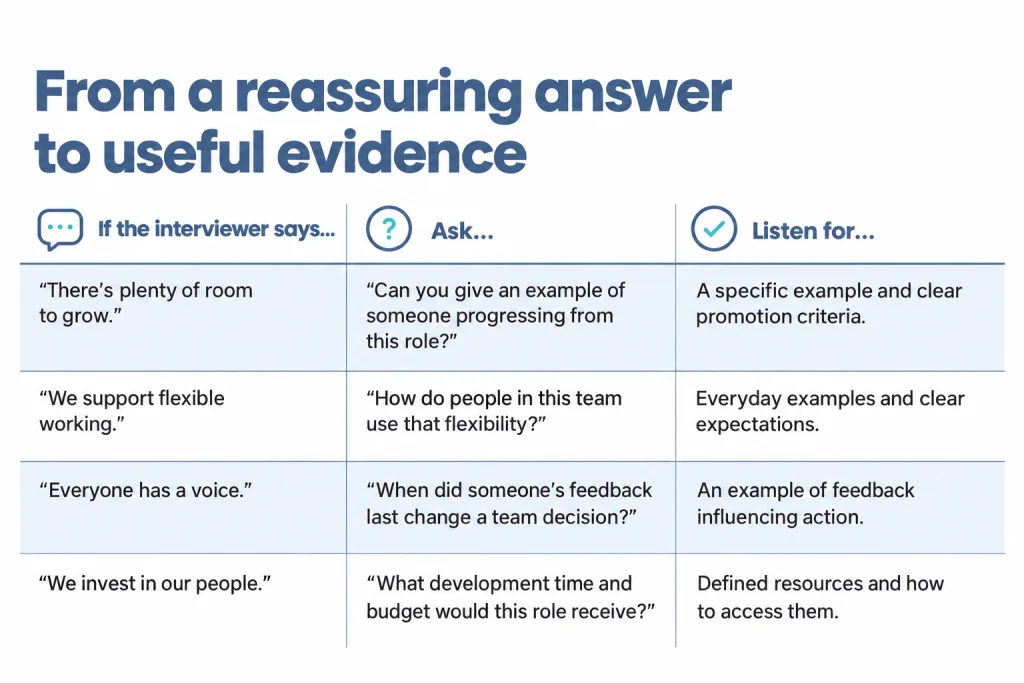
The strategic use of questions during interviews demonstrates preparation, critical thinking, and genuine interest in the opportunity. Research indicates that candidates who ask thoughtful, specific questions receive more favorable evaluations and are more likely to receive competitive offers.
Mid-career women in STEM should prepare questions that reflect their experience level and career objectives while gathering information necessary for informed decision-making. The interview process provides a unique opportunity to assess organizational fit and identify potential challenges or opportunities that may not be apparent from job descriptions or company websites.
Effective questioning strategies involve listening carefully to responses, asking follow-up questions for clarification, and taking notes to facilitate later evaluation. Studies show that candidates who actively engage in the questioning process demonstrate qualities valued in collaborative STEM environments, including curiosity, analytical thinking, and communication skills.
The questions mid-career women ask during interviews serve as powerful tools for career advancement and professional satisfaction. By focusing on advancement opportunities, organizational culture, work-life integration, compensation equity, team dynamics, and company vision, candidates can make informed decisions that support their long-term career objectives in STEM fields.